BBC NewsWorld
'Ghost particles' from space telescope wins physics Nobel
Belgian physicist Prof Francis Halzen has won for his pioneering work on an observatory that detects particles from space.
Search
BBC NewsWorld
Belgian physicist Prof Francis Halzen has won for his pioneering work on an observatory that detects particles from space.
TechCrunchTechnology
Mirror Particle will launch at TechCrunch Disrupt Startup Battlefield with a world model built from scratch to predict human behavior, arguing LLM roleplay falls short for market research and brand strategy.
Al JazeeraScience
Belgian physicist worked to build Antarctic observatory that tracks neutrinos from deep space.
The GuardianScience
Belgian physicist praised for work on the IceCube detector that observes the ghost-like particles in Antarctica The Nobel prize in physics 2026 has been awarded to Francis Halzen for his work on ghost-like particles called neutrinos and the IceCube detector that observes them at the south pole. Halzen, a Belgian…
The GuardianScience
Second up for the 2026 Nobel Prizes was the award for physics. And this year it went to just one scientist, Francis Halzen. The Belgian physicist won the prize based on his work on the IceCube detector that observes ghostly particles called neutrinos. Science editor Ian Sample tells host Madeleine Finlay how Halzen…
ScienceDailyScience
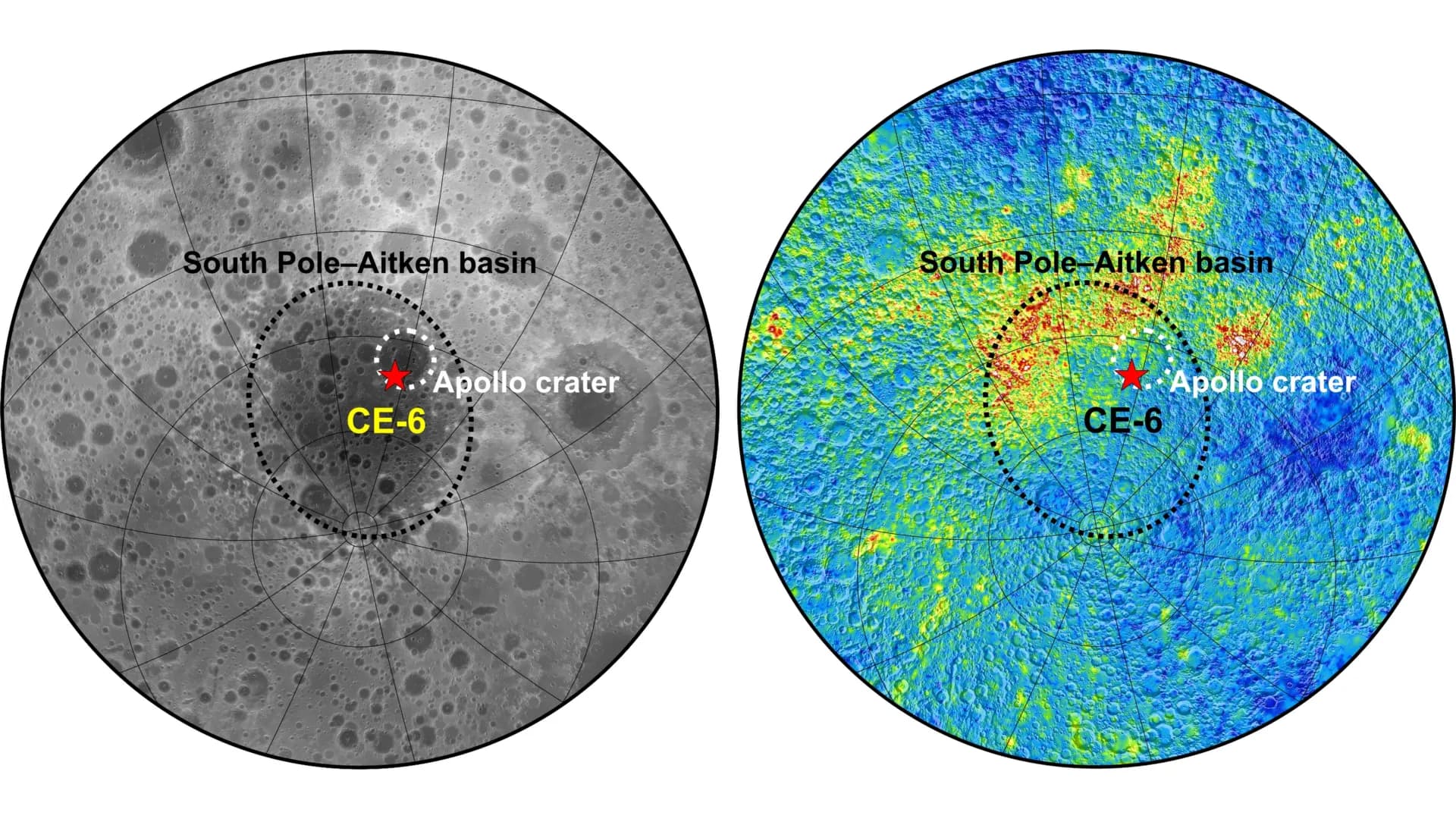
Scientists studying Chang’e-6 lunar soil have discovered a previously unknown magnetic mineral in natural Moon samples: a form of metallic iron called γ-Fe. Found inside tiny impact-glass particles, the nanoscale iron can preserve a stable magnetic signal, potentially acting like a microscopic fossil of the Moon’s…
You are all caught up